
Rural Voice November 2026: The 57th Annual Convention and Public Land for the Public Good

The 57th Annual Convention
This November, the National Farmer Union is heading to Winnipeg! From November 19th to 21st, join farmers, farm workers, members and allies from across the country in Winnipeg, Manitoba, or online, for the NFU’s 57th Annual Convention. This year’s theme, AgriCULTURE, brings us back to the heart of what connects us. Over three days, we’ll come together to discuss member-led policy, hear from engaging speakers, share ideas and experiences, and build collective strategies for the future of farming and food in Canada.
This year’s keynote speaker is Clayton Thomas-Müller. Clayton Thomas-Müller is a member of the Treaty #6-based Mathias Colomb Cree Nation located in Northern Manitoba. He has been recognized by Yes Magazine as a Climate Hero and is featured as one of ten international human rights defenders in the National Canadian Museum for Human Rights. Clayton is an award-winning film director, media producer, organizer, facilitator, public speaker, and bestselling author on Indigenous rights and environmental and economic justice. His book, Life in the City of Dirty Water, is a national bestseller. Clayton serves as the Arctic & Hudson Bay Campaigner for Climate Reality. He is currently organizing efforts to stop the export of LNG & other fossil fuels from Western Canada and critical minerals from Ontario’s Ring of Fire out of his Peoples’ homelands via the Arctic Port of Churchill.
We look forward to seeing you at convention! Register today https://www.nfu.ca/2026convention/
Public Land for the Public Good
The National Farmers Union of Ontario (NFU-O) is pleased to share that the ‘Public Land for the Public Good’ guide is now available!
This guide draws on research and interviews from farmers, public landholders and partner organizations or businesses who are lighting the way for diversified farm leases on public land. It aims to outline best practices and leasing standards for public landholders looking to further develop their agricultural leasing programs in a way that emphasizes food sovereignty, sustainable practices, and resilient localized food systems.
Each section of this guide illustrates key considerations when building out a public land leasing program in Ontario that supports diversified farm practices. The sections cover topics like new plot development, determining rental cost, soil & environmental health, equity and non-discrimination, setting lease lengths, infrastructure and maintenance, landholder and tenant relations, and housing.
Read the guide here: Public Land for the Public Good
The establishment of strong agricultural lease programs on public lands is more important than ever. Public landholders have both a duty and opportunity to manage public land in the public interest, supporting essential components to a strong society like ecological, economic, social, cultural and public health benefits for current and future generations. This is especially important right now, as Canada faces an impending farm succession crisis. One key barrier for new entrant farmers is that the cost of land no longer reflects its agricultural value due to the pressures of excessive farm debt loads, input financing, the conversion of farmland to nonfarm uses, resource extraction, urbanization and land grabbing.
If designed effectively, modern public farmland leasing programs can offer a land access solution and support the next generation of food producers in the province while upholding principles of fairness, sustainability, and the public good. Many of these farmers are interested in operating small to midsize diversified farms, which can involve sustainable or agroecological practices, like producing a wide variety of crops and/or raising different types of livestock on a single farm to serve a local market, rather than specializing in one single commodity.
Diversified, small to midsize farms provide significant community benefits by contributing to resilient food systems, strengthening local economies, improving biodiversity and soil health, and facilitating social engagement. These benefits are well aligned with the needs of local communities and the strategic priorities of public landholders – namely economic development, sustainability, environmental stewardship, and public health. With land access being one of the biggest barriers for diversified, small to midsize farms, public landholders have a unique opportunity to simultaneously fulfill governmental strategic priorities while supporting our next generation of farmers, and ensuring the health and food sovereignty of our communities.
The NFU-O supports and encourages public landholders to evaluate their existing or prospective agricultural lease programs, and to use this guide as a reference for best practice methodologies. For further conversations on agricultural lease programs on public lands, we invite you to reach out at office@nfuontario.ca.
These articles might also interest you:
Northeast Pickering Secondary Plan
Alto High Speed Rail Line
The Pickering Lands
Conservation Authority Amalgamation

Job Posting: National Farmers Union – Ontario, Operations Director
Land Access Stories from the Field: Lawoti Farms
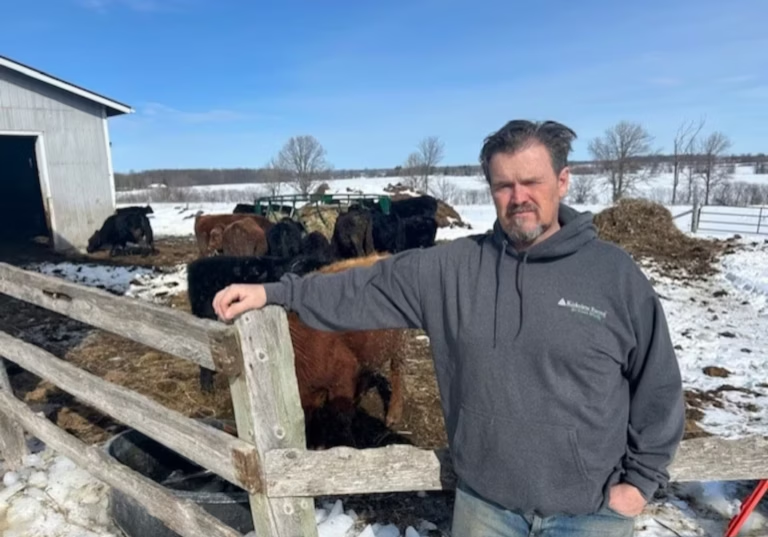
Eastern Ontario residents raise concerns proposed high-speed rail will impact farms

2025 Year In Review
