
Dry wells and disappearing ponds: What’s going on with the water in Waterloo Region?
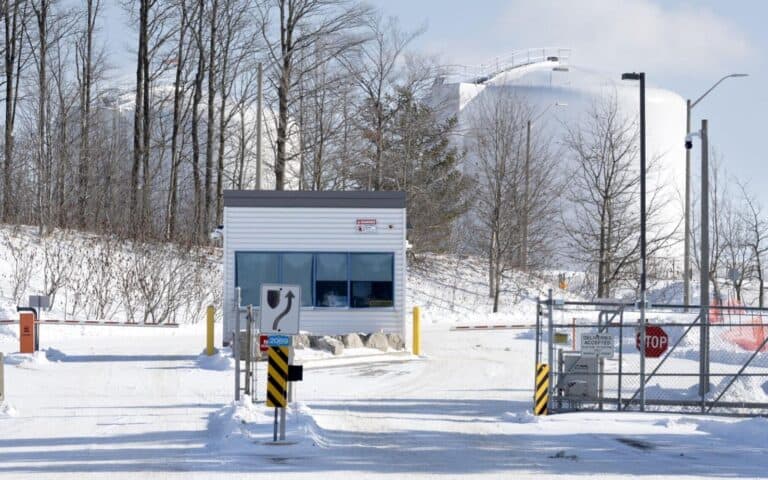
For decades, the water table under Wilmot Centre has dropped, say local farmers. It’s part of a global trend. The United Nations released a report in January saying 70 per cent of the world’s aquifers are in long-term decline because of urbanization, industrialization and pollution.
There was lots of water when Stewart Snyder built his farm in 1978 on Nafziger Road in Wilmot Township, and he’s watched the water table drop ever since.
“I am on my third well since 1978,” said Snyder. “Every time we had to go deeper and the water gets harder.”
Snyder’s farm is about 10 kilometres west of Shingletown, where residents are reporting dry wells and disappearing ponds. A private-sector hydrologist recorded a drop in the water table around Shingletown of 1.5 to two metres in 2021, and it never recovered.
And Snyder is reporting a similar experience.
“The water tables are dropping,” said Snyder.
Since 2019, the Region of Waterloo secretly diverted 30 litres a second from the Wilmot Centre well fields into the Mannheim water treatment plant, which serves Kitchener, Waterloo, Elmira, St. Jacobs, Conestogo and St. Agatha. To put that in perspective, the Toyota plants in Cambridge use 24 L/sec.
Word of that water diversion came nearly three months after the region announced no new connections to the water system would be allowed in the areas serviced by the Mannheim water treatment plant. And the diversion violates a 1980 agreement between the Region of Waterloo and Wilmot Township.
“I am not impressed,” said Snyder. “There is not a damn thing we can do about it.”
The water diversion was proposed by regional staff as the first step in easing the water-supply crisis that caused a development freeze. But regional councillors were surprised to learn the diversion started in 2019.
So was Jennifer Pfenning of Baden, who grows organic vegetables on her own farm and two others that she rents. In total, she farms about 700 acres. And like Snyder, she’s had to sink new wells and go deeper to find water.
When she started out 30 years ago, Pfenning seldom used the irrigation equipment during the summer months. But for the past 10 years, the irrigation equipment was needed every year for at least a few weeks as summer became hotter and drier.
The climate crisis is happening in real time, says Pfenning, and for the farmers and residents of Wilmot Centre, the most serious impacts are underground and out of sight — declining amounts of water in the aquifers.
What is happening in Wilmot is part of a global trend. The United Nations released a report in January saying 70 per cent of the world’s aquifers are in long-term decline because of urbanization, industrialization and pollution.
The climate crisis brings more hot, dry weather during the summer months and sees less rainwater to refill the aquifers.
“Back in the ’80s and ’90s, there was a lot of talk about water conservation, there were programs to switch to lower-volume toilets and flow restrictors for shower heads,” said Pfenning.
“We have stopped really looking at it, and instead it seems like they just decided to pump more.”
This region relies on underground aquifers for 80 per cent of its water supply, and farmers like Pfenning and Snyder are supported by public- and private-sector hydrologists who say the aquifers are low.
“Pulling more water doesn’t fix that,” said Pfenning, who was re-elected to another term as president of the National Farmers Union last November.
Wilmot Mayor Natasha Salonen and other members of regional council first heard about the diversion of water from Wilmot to the Mannheim plant during a meeting Wednesday night.
“I definitely have questions,” said Salonen. “That is a clear violation of the 1980 motion.”
When staff first proposed the water diversion as a way to ease the supply crisis and development freeze, Salonen agreed and tabled a motion to rescind the 1980 agreement. Then she and the rest of council learned the diversion actually started in 2019.
“What impact has this had?” said Salonen on the neighbouring wells. “Has it had some adverse impacts that have not been reported to the region?”
She says regional council should not be making irreversible decisions about water supply without a water-supply strategy. A new one is due in 2027.
Dry wells and disappearing ponds: What’s going on with the water in Waterloo Region?
These articles might also interest you:
Eastern Ontario residents raise concerns proposed high-speed rail will impact farms
Re: ERO 025-1257 – Proposed boundaries for the regional consolidation of Ontario’s conservation authorities
NFU-O Member Profile: Alberto from Nature’s Apprentice Farm
Persephone Farm & Market Garden: A Living Laboratory for Regenerative Agriculture
Ecosystem Service Payments: Enhancing Sustainability in Agriculture

This Ontario Farmer is Leading a Movement to Stop a Highway

NFU calls for action on Senate report addressing soil degradation
Even Green Thumbs Require Cultivation