
Ontario residents stopped an airport, but now developers are coming for the land
Ontario residents stopped an airport, but now developers are coming for the land
National Observer
April 27, 2026
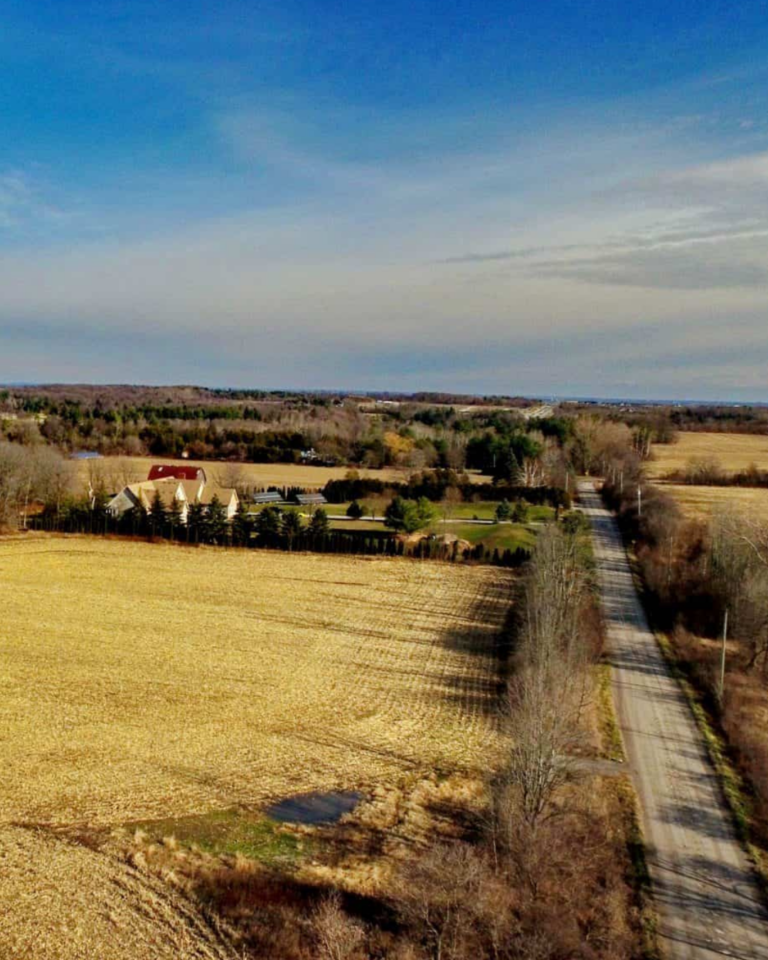
For decades, a group of environmentally-concerned Pickering residents fought to stop construction of a runway on 9,300 acres of federally owned, environmentally sensitive land on Toronto’s eastern edge — and they won.
But now, they say, the valuable farmland is at risk from private developers after the federal government and the city of Pickering proposed making parts of the land available for residential and commercial use to add housing and create jobs.
Farmers and environmentalists say the land is too valuable to lose and argue it should be permanently protected as public land. It is classified as rare Class 1 farmland and is situated beside Rouge National Urban Park — both areas are home to species at risk, rich biodiversity and fragile wetlands already under climate pressure.
At a packed open house hosted by the City of Pickering on April 22, residents filed past maps and easels outlining three possible futures for the lands: all options included a mix of employment zones, a blend of housing and agriculture and an expansion of Rouge National Urban Park.
The federal government has already ruled out an airport and signalled that portions with high conservation value would be transferred to Parks Canada.
A national consultation wrapped up April 17. Transport Canada is now reviewing feedback before deciding whether this rare stretch of Class 1 farmland becomes another piece of the Greater Toronto Area’s fast-tracked development, or a permanent public asset for food, nature and climate resilience.
“The Government of Canada is consulting First Nations and engaging provincial and municipal governments, the local community and the public to get input and feedback on opportunities for the Pickering Lands,” said Flavio Nienow, a communications advisor with Transport Canada in an email response. A “What We Heard” report is expected, but the final call will rest with Ottawa, he said.
In the meantime, the City of Pickering is trying to shape that outcome.
Inside the consultation room, the city’s message was to protect most, but not all, of the land.
In each of the three options, the city proposes setting aside up to 30 per cent of the land for commercial use — projected to create about 22,700 jobs — while the rest would go to agriculture and expanding Rouge National Urban Park, with little residential development.
“We want to protect the majority of these lands, while allowing a small portion for employment uses,” said Fiaz Jadoon, Pickering’s director of economic development and strategic projects.
“A lot of municipalities don’t have that opportunity or the ability to take a hard look at shifting the tax base from residential to non-residential. That’s something we’re looking at — what opportunities exist to attract jobs and generate revenue,” Jadoon told Canada’s National Observer.
That includes commercial, industrial, advanced manufacturing, clean industries and agri-food uses, he added.
Mayor Kevin Ashe says the city is trying to strike a middle ground after decades of uncertainty.
“This is an opportunity to safeguard the vast majority of it through agricultural designation or by adding it to Rouge National Urban Park, while also creating jobs, generating tax revenue and opening up opportunities,” he said.
Ashe told Canada’s National Observer Pickering has met its housing targets in recent years but is continuing to grow and needs more land for industry to create jobs and support development. “We’re welcoming new residents, but with that comes the need for infrastructure — libraries, doctors, hospitals and places for recreation.”
“Missing the point,” local advocates say
Local environmentalists and farming advocates argue there is already enough land within existing urban boundaries to accommodate housing and industry — and this land should be off-limits.
A 2018 analysis commissioned by Land Over Landings says the lands could generate far more value if kept in agriculture rather than developed — envisioning a regional food hub supplying fresh food to the Greater Toronto Area, while creating jobs and supporting a more sustainable local economy.
With long-term leases and diversified farming, the report estimates annual farm output could rise from about $3.7 million to more than $25 million, with total economic activity — including tourism — topping $221.2 million per year.
The report also highlights the land’s broader value — its soil, water systems and proximity to a major urban market.
Adrian Stocking, president of National Farmers Union Ontario Local 345, said those fundamentals are being overlooked.
“All of these development plans are really missing the point,” he said. The city talks about agriculture as though it doesn’t employ people. “It’s always seen [farmland] as more valuable to develop it, but that’s a falsity.”
Only about 0.5 per cent of farmland in Canada is classified as Class 1 — the highest quality, capable of growing almost anything. Ontario is already losing more than 300 acres of farmland a day to development.
“When we pave over it, we lose it forever,” Stocking told Canada’s National Observer. “This is about protecting our food source and future generations’ ability to feed themselves.”
He also pushed back on the idea that developers need more land to solve housing shortages.
“It’s not about what’s best for the community — it’s about how much money goes into developers’ pockets,” he said, adding that housing can be built within existing urban areas.
Others echoed that concern, warning that even limited development risks setting off a familiar pattern.
“Any sort of development there would be sprawl-type development,” said Abdullah Mir, co-chair of advocacy group Stop Sprawl Durham. “At the end of the day, it’s going to cost taxpayers more than it brings in.”
Mir said the land presents a chance to rethink how the region grows — not just protect it, but use it differently.
“These lands can produce economic value through agriculture, agritourism and local food systems — without being paved over,” he said.
“That’s the beauty of Pickering — it’s an urban city in the south and a beautiful rural area in the north,” he said. “We should be building on that, not replacing it.”
A fourth option — not on the table
For many at the open house, the three official options didn’t go far enough.
Peggy Bowie proposed her own alternative: “Option 4 — ask Ottawa to transfer the entire 9,300 acres into Rouge National Urban Park which would continue to allow the land to be used for farming and recreation.
In a joint statement, a coalition of environmental and agricultural groups warned opening the lands to development would undermine both climate and food security goals.
Adrian Stocking, president of National Farmers Union Ontario Local 345, says the value of farmland is being overlooked in current proposals. Photo by: Abdul Matin Sarfraz / Canada’s National Observer.
“The true public good here would be placing it within a national park,” said Alexis Whalen, chair of Land Over Landings.
Bowie said the city’s proposed plans fail to respect natural waterways.
“I think there’s a real lack of respect for natural waterways — the idea that they can be buried to make room for businesses or development is very concerning,” she said.
Bowie warned of long-term risks, including flooding. “Flash floods have gone through these lands before, and they do in other areas as well. We need to think long-term.”
Others raised concerns about what development could mean on the ground.
For Stephen Marshall, who runs a two-acre community farm on the lands, the stakes are immediate.
“All of these options destroy the garden,” he said.
“What’s being asked is whether people want development — but all the options lead to development. There’s no option to say no.”
Marshall told Canada’s National Observer the land’s current use shows what’s possible without major infrastructure — a cooperative garden growing dozens of crops, supplying fresh produce to food banks and bringing together residents from around the world.
“The only way to ensure this land is protected for agriculture is to keep it publicly owned,” he said.
Whalen told Canada’s National Observer the consultation process has been unsettling, particularly the inclusion of development-heavy scenarios.
“What we didn’t expect was to see urban development options given nearly equal weight,” she said. “That’s the part that feels unjust.”
This story has been updated to correct the Land Over Landings analysis of annual farm output for the lands under review.
These In the Media might also interest you:
Federal Government Holds the Keys to an Unprecedented Public Lands Legacy
Council pauses decision on plans for new community in northeast Pickering

Ontario Nature: Broad Coalition of Civil Society Organizations Calls for a Halt to the Consolidation of Ontario’s Conservation Authorities
Broad Coalition of Civil Society Organizations Presents Legislative Petition to Repeal Bill 5