

Letter to the City of Pickering: National Farmers Union – Ontario requests that you vote NO to the Northeast Pickering Secondary Plan
Date: March 19, 2026
To: His Worship the Mayor and Members of Council, City of Pickering
Cc: City Clerk; City Development; Economic Development & Strategic Projects
Re: Vote No on the Approval of the NEP Secondary Plan
Dear Mayor and Councillors,
The National Farmers Union – Ontario (NFU-O) represents farm families across the province, including producers in Durham Region and the City of Pickering. We support new homes and jobs, while safeguarding Ontario’s best farmland and the agricultural system that sustains food security and rural economies.
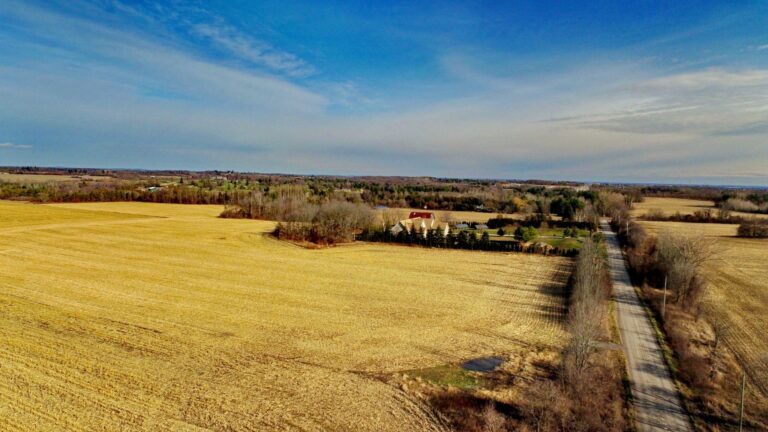
In November of 2025, the NFU-O sent a letter to the Mayor and Council requesting a deferral of the approval of the Northeast Pickering (NEP) Secondary Plan. It has come to our attention that instead of deferring and moving through essential assessment, consultation, and mitigation processes, the City of Pickering is utilizing a procedural bypass to fast-track the proposed 4,356-acre (1,763 ha) urban expansion in the NEP Secondary Plan in a Special Council meeting scheduled for March 30th, 2026.
We are writing to request that council members vote no on the current NEP Secondary Plan proposal. Advancing this proposal prior to completing required studies and planning measures is inconsistent with the Planning Act, the Provincial Planning Statement (2024), and the Durham Regional Official Plan (DROP). The NFU-O is particularly concerned with how this plan threatens the protection of prime agricultural land and the local environment, introduces significant concerns for flood risk and environmental compliance, presents a significant fiscal risk to Pickering residents, fails to meet regional Official Plan preconditions, and fails to provide for meaningful Indigenous consultation.
Protect Ontario’s Finite Prime Agricultural Lands
The lands proposed for this urban expansion consist of Class 1 soil, the highest-quality farmland in the country. Under the Planning Act, prime agricultural lands may only be converted where no reasonable alternatives exist. The Region’s Scenario 4 Growth Management study displays that housing targets can be met through intensification and the build-out of Seaton, confirming that the destruction of this Class 1 soil is not a planning necessity. The city must not approve this expansion without a thorough evaluation of alternative expansion locations that avoid prime agricultural areas and, where avoidance is not possible, consider reasonable alternatives on lower priority agricultural lands in prime agricultural areas, in adherence with the provisions laid out in PPS 2024 Section 2.3.2.1(d).
Prioritize Planning to Reduce Flood Risk Impacts
Paving over the Carruthers Creek headwaters is being considered before completion of the Master Environmental Servicing Plan. Initial modeling indicates potential peak flood flow increases exceeding 100%, raising concerns for downstream communities and compliance with PPS climate adaptation and infrastructure coordination policies. Moving forward with an approved NEP Secondary Plan puts the environment, urban, and rural residents at environmental risk. The city must complete the MasterEnvironmental Servicing Plan to determine alternative options to paving over the Carruthers Creek headwaters, which would impact flood risk and potentially cause increased water and sewer rates for residents.
Mitigate Financial Impacts on Residents
City financial reports already identify a $498 million infrastructure shortfall through 2039, with no quantified costs for growth between 2039–2051 or for an additional 27,000 residents expected after 2051. Approving further expansion without the required DROP Section 4.4.4 Fiscal Impact Assessment raises concerns about long-term infrastructure viability, and potential increases in water and sewer rates across Durham. In order to integrate the true cost of water services to residents into responsible decision making processes, the DROP Section 4.4.4 Fiscal Impact Assessment must be completed.
Demonstrate Efficient Use of Existing Urban Lands
The DROP requires expansion proposals to occur within a comprehensive municipal review and to demonstrate efficient use of existing urban lands. The current proposal appears to bypass these requirements by advancing ahead of the City’s ongoing Pickering Forward Official Plan Review and without a completed Seaton build-out assessment. The city must adhere to the DROP’s provisions for expansion proposals by completing the Pickering Forward Official Plan review as well as a completed Seaton build-out assessment in advance of any approvals.
Undertake Meaningful Indigenous Consultation
The Mississaugas of Scugog Island First Nation have raised concerns regarding consultation and the absence of a cumulative effects assessment on their traditional lands. Meaningful Indigenous consultation with the First Nations communities in the area must be undertaken, and requests for required assessments must be completed before urban boundary expansion decisions can be made. The NFU-O urges the Pickering City Council to reject the Northeast Pickering Secondary Plan in its current form. The current proposal would fast-track paving over prime Class 1 farmland despite viable alternatives, bypass required studies and consultations, and potentially increase flood risks and infrastructure costs for residents. NFU-O emphasizes that approving the plan now would undermine provincial and regional planning rules, ignore Indigenous consultation obligations, and jeopardize both food security and financial sustainability.
Respectfully
Josh Suppan
NFU-O President
president@nfuontario.ca
(705) 738-3993 – #2
These Policies and Briefs might also interest you:

NFU-O Calls on Transport Canada to Permanently protect the Pickering Lands
NFU-O Policy Position on the Alto High-Speed Rail Project
A Vision for a Regional Food Hub on the Federal Pickering Lands
Re: ERO 025-1099 Consultation on simplifying and standardizing official plans and ERO 025- 1097 Proposed Changes to the Planning Act (Schedule 10 of Bill 60 – the Fighting Delays, Building Faster Act, 2025)
Re: ERO 025-1077 Consultation on Proposed Special Economic Zones Criteria

Re: ERO #025-1077 – Consultation on Proposed Special Economic Zones Criteria

Re: ERO 025-0908 – Developing guidance on section 16 activities under the Species Conservation Act, 2025

Re: ERO 025-0909 – Proposed legislative and regulatory amendments to enable the Species Conservation Act, 2025.