
Farmland Loss Is a Public Interest Issue

In recent months, a series of development-oriented projects and provincial bills have been introduced that threaten four foundations of public wellbeing: local decision-making, environmental protection, responsible housing development, and prime agricultural land.
These issues are connected. When the province overrides local planning, weakens environmental oversight, and treats farmland as a land bank for development, Ontarians lose more than soil. We lose democratic accountability, ecological resilience, food-producing capacity, and the chance to build housing responsibly.
Development Without Accountability
The province is increasingly overriding local plans and expertise to expand urban boundaries for housing and development. This is happening in places such as Simcoe County and Pickering, where municipalities are being pushed to accommodate major population growth by 2051.
Provincial pressure has forced municipalities to rapidly plan for expanded infrastructure and services. Too often, those costs are passed down to residents instead of developers. In Pickering, consequences are already visible: parts of the Seaton community lack schools, adequate waste services, roads, sidewalks, and other essential infrastructure.
Further efforts to diminish municipal planning powers can be seen in Bill 98, which proposes changes to Site Plan Control and limits what municipalities can require. Site Plan Control is an essential tool for implementing recommendations from Agricultural Impact Assessments, which help reduce conflicts between development and farming.
At the same time, Ontario continues to lose prime agricultural land at an alarming rate. Class 1 soil takes thousands of years to form. It is the highest-quality agricultural land, with no significant limitations for crop production. Yet because development often generates more immediate economic returns, farmland continues to be treated as expendable.
Ontario loses an estimated 319 acres of farmland every day. Over the past 35 years, approximately 18 per cent of the province’s farmland has been converted to non-agricultural uses such as urban development and aggregate extraction.
While prime farmland in Southern Ontario is being paved over, the province is proposing to expand agricultural production in Northern Ontario’s Clay Belt. Bill 109, the Protecting Ontario’s Food Independence Act, 2026, is being presented as a food-sovereignty measure. But it risks feeding on economic scarcity fears while overlooking the financial, environmental, and agricultural-system demands of such a shift.
Canada Land Inventory ratings are based on soil potential, not current readiness. Clay soils require significant investment in drainage infrastructure, roads, suppliers, processors, and other supports before they can become broadly productive. Paving over some of the most productive soil in the country, then using public money to make northern clay soils agriculturally viable, is not a serious farmland protection strategy.
The province recognizes the need for increased food sovereignty. But expanding industrial-scale, export-oriented acreage will not necessarily address local food and nutrition needs.
Governments have an opportunity to act in the public interest by supporting real food sovereignty on the Transport Canada lands. This area contains mostly Class 1 soil and could serve as a regional food hub for one of Canada’s largest urban centres. Transport Canada faces choices among residential, commercial, transportation, and conservation uses, including a possible Alto high-speed rail corridor and potential expansion of Rouge National Urban Park. We have urged the federal government to transfer all 9,300 acres to Rouge National Urban Park.
Environmental protections are also being weakened. Bill 97 proposes to consolidate Ontario’s conservation authority structure, reducing localized conservation expertise at the watershed level. These staff support conservation, flood protection, agro-ecological initiatives, and practical collaboration with landowners and farmers.
The province has also repealed Ontario’s Endangered Species Act and replaced it with the Species Conservation Act. While framed as a way to speed up approvals for housing, transit, infrastructure, and other projects, the change risks weakening habitat protection and making the destruction of critical habitat easier.
Take Action
Ontarians who care about responsible housing, environmental protection, farmland preservation, food sovereignty, and democratic decision-making must work together to protect our collective resources.
Send a letter to your MPP asking them to protect prime agricultural land, local planning authority, and environmental oversight. Join or support organizations working to protect farmland and the environment while advancing smart housing development. Talk to your neighbours about what is being lost, what is being promised, and who is being asked to pay the price.
These Policies and Briefs might also interest you:
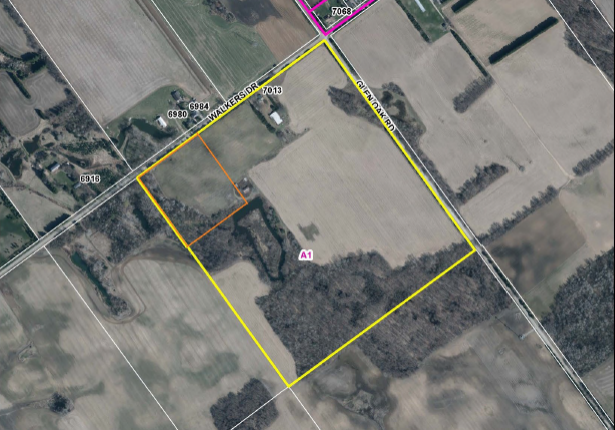
Vote No on ZBA25-2025 OPA5-2025, 7013 Walkers Drive
ERO 026-0310 – Proposal to reform site plan control under the Planning Act and the City of Toronto Act, 2006
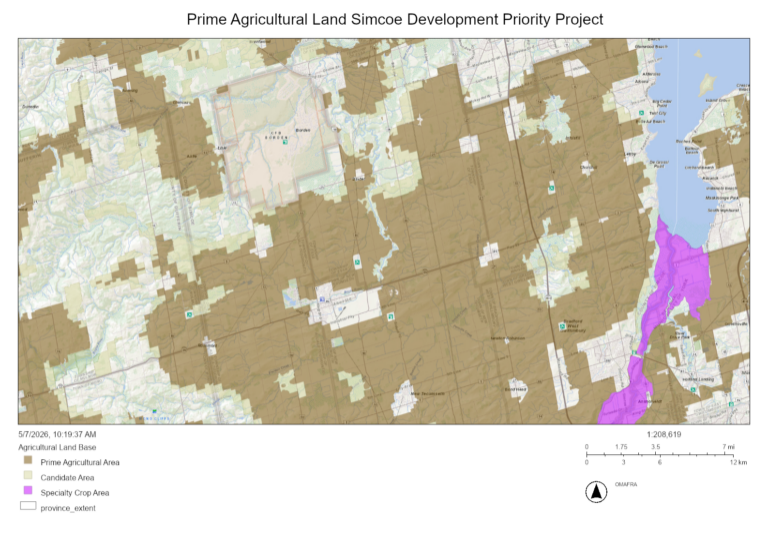
ERO 026-0383 – Addressing Growth and Housing Needs in South Simcoe
Fertilizer access is a food sovereignty issue
Letter to the City of Pickering: National Farmers Union – Ontario requests that you vote NO to the Northeast Pickering Secondary Plan
NFU-O Calls on Transport Canada to Permanently protect the Pickering Lands
NFU-O Policy Position on the Alto High-Speed Rail Project
A Vision for a Regional Food Hub on the Federal Pickering Lands