

Council pauses decision on plans for new community in northeast Pickering
Chief Kelly LaRocca of the Missississaugas of Scugog Island First Nation is not backing down on her opposition to the plans.
Pickering council won’t be making a decision on plans for the city’s northeast end for at least another month.
At a special council meeting March 30, staff recommended council approve the Northeast Pickering Secondary Plan, which would set the land use and development framework for the proposed community expected to bring 72,000 people and 9,700 jobs to the area.
Mayor Kevin Ashe had deferred the matter to this special council meeting after questions and concerns were raised at a planning and development committee meeting earlier in March.
After hearing from around a dozen residents and landowners with concerns about the secondary plan March 30, council unanimously voted to postpone the decision until after staff meets with the Mississaugas of Scugog Island First Nation (MSIFN). Staff will also work to answer questions raised at the meeting.
“Pickering’s deferral acknowledges procedural shortcuts are unacceptable,” Stop Sprawl Durham said in a statement. “The city cannot grant the ‘principle of development’ until all mandated studies are complete, peer-reviewed and public.”
The group added council must prioritize the provincially mandated statutory comprehensive review “over expedited timelines to ensure the community’s environmental safety and fiscal health aren’t compromised by unverified data.”
The motion by Coun. Linda Cook and seconded by Coun. Maurice Brenner specifically directs staff to hold a meeting to address MSIFN’s concerns, including the implementation of an appropriate consultation protocol between the First Nation and the City of Pickering.
Staff are expected to report back to council on April 27.
Mississaugas of Scugog Island First Nation’s concerns
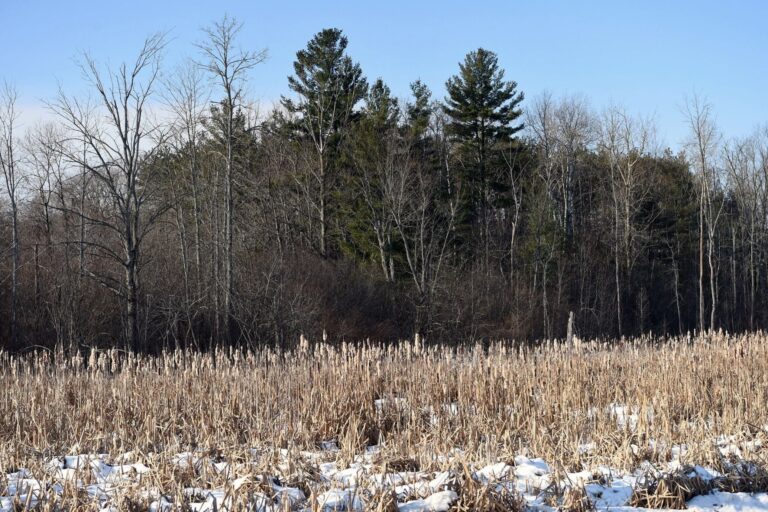
The 1,763 hectares of land in question is generally bounded by Eighth Concession Road to the north, Lake Ridge Road to the east, Highway 7 to the south and Westney Road to the west.
MSIFN Chief Kelly LaRocca sent a letter to council on March 25, reminding them the lands in the secondary plan are within the First Nation’s traditional and treaty territory.
LaRocca said the First Nation has continuously stated its concerns with the plans to develop the land and indicated a lack of sufficient consultation with the MSIFN.
Farmland concerns
Other concerns from delegates at the meeting included paving over top-quality farmland, potential flood risks and higher taxes resulting from the infrastructure required to support a large, new community.
Adrian Stocking, president of the National Farmers Union Local 345, said advancing this proposal before completing required studies and planning measures is inconsistent with Ontario’s Planning Act, the Provincial Policy Statement and Durham Region’s official plan.
Stocking said the land consists of Class 1 soil, which is “the highest quality farmland in the country.”
In the Planning Act, prime agricultural lands may only be converted where no reasonable alternatives exist, he said.
He noted the plan preferred by Durham Region staff shows housing targets can be met through intensification and the buildout of Seaton and a thorough evaluation of alternative expansion areas that avoid Prime 1 farmlands is necessary.
He said destroying farmland would basically create a population without a means to feed itself and protecting this soil should be “of the highest importance” to council.
Staff comments
Kyle Bentley, director of city development and chief building officer, said for a plan of this scale, it’s typical for studies to be completed over the course of many years to comprehensively capture the study area’s future needs. As part of the technical background work, 13 studies were completed and one, the scoped watershed study, is ongoing and moving onto the next phase, he said.
The staff report noted that since the province approved development on the land and deemed it a “2051 Urban Expansion Area,” if the city did not put forward a secondary plan, the Pickering Landowners Group, which owns more than half of the land, could put forward its own secondary plan as an amendment to the city’s official plan, and the city would have to process it.
Ashe said he will contact LaRocca with a goal to meet as soon as possible.
Council pauses decision on plans for new community in northeast Pickering
These In the Media might also interest you:

Ontario Nature: Broad Coalition of Civil Society Organizations Calls for a Halt to the Consolidation of Ontario’s Conservation Authorities

Broad Coalition of Civil Society Organizations Presents Legislative Petition to Repeal Bill 5